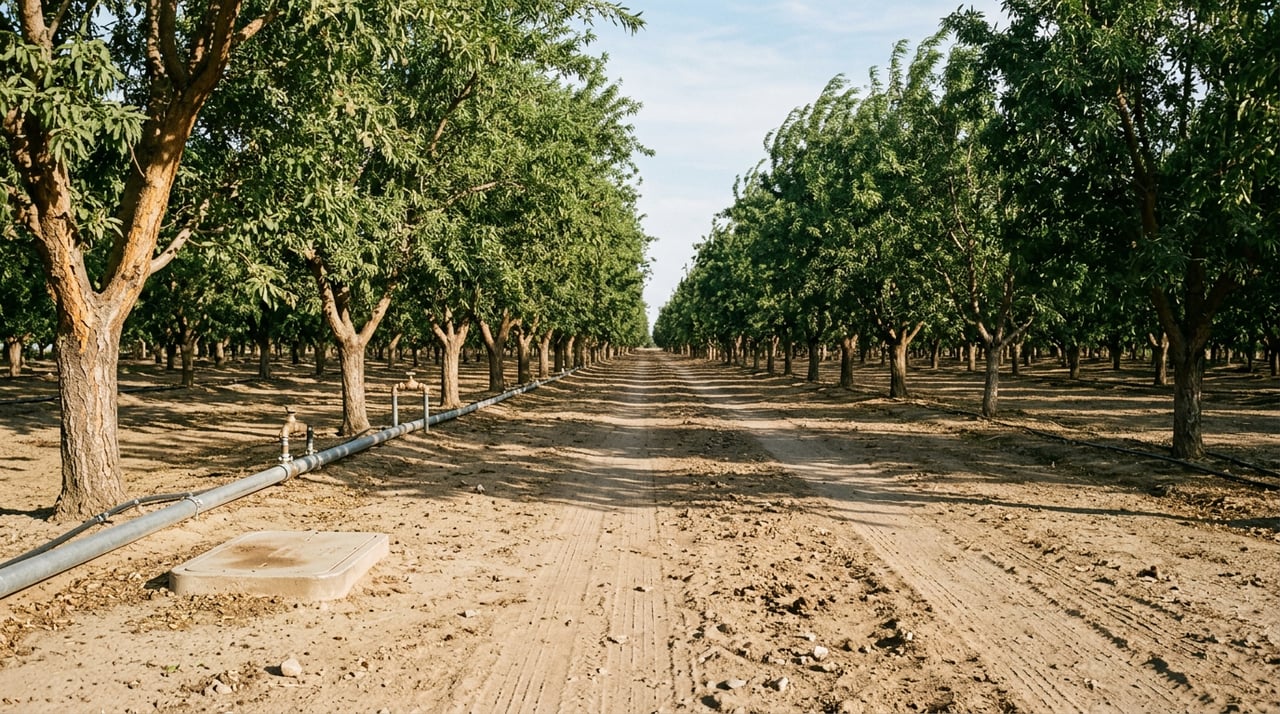
Selling farmland around Turlock is different from selling almost any other asset. Water access, orchard age, leases, and harvest timing can swing value by thousands of dollars per acre. If you want a clean sale and a strong price, you need a plan that speaks the language of local growers and institutional buyers. This guide gives you that plan, grounded in current data and the realities of the Turlock Subbasin. Let’s dive in.
Turlock market snapshot
Stanislaus County is a top-tier farm economy. The county’s 2022 Agricultural Crop Report shows a total gross value of $3.726 billion, led by milk and almonds, which together account for about half the total value. You can review the full breakdown in the county’s latest Agricultural Crop Report.
For national context, USDA’s 2024 Land Values Summary reports average farm real estate at about $4,170 per acre and cropland at about $5,570 per acre. California, and especially the Central Valley, trades well above those figures, and prices are highly dependent on water access and soil quality. See USDA NASS Land Values: 2024 Summary for the national view.
Local surveys highlight a wide range in Stanislaus County. East-side cropland with district surface water has traded roughly in the $23,000 to $38,000 per-acre range, while areas relying on federal-district deliveries or wells alone often see $13,000 to $18,000 per acre. Permanent plantings with reliable district water usually command a premium. Review the 2024 local ranges from Terra West for a directional benchmark.
Water governance is central to value. The Turlock Subbasin’s Groundwater Sustainability Plan (GSP) is active and under ongoing revision, and buyers are modeling potential assessments, allocations, or recharge requirements. Get familiar with the basin plan at the Turlock Subbasin GSP page.
The Turlock Irrigation District (TID) is another major driver. Parcels with reliable TID deliveries often sell quicker and at higher prices, while well-only parcels tend to face discounts. Review current context on TID’s irrigation and drought page.
What drives value when you sell
Water access and reliability
Water is the single most important factor. Buyers will examine whether you have district surface water, well-only supply, or a mix, and they will request delivery records and fee schedules. They will also price in future SGMA exposure, so have GSA boundary maps and assessment details ready. The local GSP activity is detailed at Turlock Subbasin GSP, and recent Prop. 218 items appear on the ETSGSA assessments page.
Key actions:
- Gather TID account history and water delivery documentation if applicable.
- Compile well logs, pump tests, and meter data to prove capacity and reliability.
- Provide any SGMA or GSA notices, fee schedules, or ballots tied to your parcel.
Orchard-specific factors
If you are selling an almond or walnut orchard, buyers add the land value to the orchard asset value. Tree age and years to replant drive the most adjustment. Variety, rootstock, spacing, irrigation system type, and uniformity all influence projected yields and costs.
Helpful documentation:
- Planting maps with dates, varieties, rootstocks, spacing, and block layout.
- Three to five years of yield and quality records, including tickets and handler statements.
- Irrigation system specs, pump serial numbers, filtration details, and maintenance logs.
- Evidence of pest or disease management. University resources, such as UC IPM on almond pests, help buyers evaluate risks. See the UC IPM almond pest guide. For cost modeling context, growers often reference university production cost studies, as noted in this Ag Alert summary.
Soil, drainage, and salinity
Buyers look for productive soils with good drainage. Expect soil sampling requests for salinity or pH if replanting is likely. If you have tile drainage or recent soil lab results, put them in your data room.
Size, shape, and location
Contiguous, square blocks are easier to farm and often earn premiums from nearby operators. Proximity to hulling, processing, and packing infrastructure can help specialty-crop buyers underwrite logistics.
Legal status and taxes
Williamson Act enrollment can reduce assessed property taxes and influence buyer interest. Confirm your contract status, and whether the parcel is in active enrollment, non-renewal, or cancellation. The county outlines program details at the Stanislaus Williamson Act page.
Leases and income
Leases can support value under an income-cap approach. Written leases that clarify responsibilities for repairs, irrigation infrastructure, and insurance are best practice. Common structures include fixed cash rent and crop-share. For a plain-English overview of lease forms and terms, see this Iowa State guide.
Timing your sale around harvest
Many orchard sellers prepare and list after harvest in winter or early spring. This avoids disrupting operations and lets you present full production records. If you need a faster close, you can market earlier, but you should use clear contract language about possession and harvest rights.
Clarify “crops in the ground.”
- Decide whether the current season’s crop transfers with the sale or stays with the seller.
- Put the crop allocation in writing to avoid disputes during escrow.
Address tenant and service contracts.
- Confirm lease terms and any termination or assignment notices.
- Identify pollination contracts and input or processing agreements, and whether a buyer will assume them.
Pre-listing checklist buyers expect
Create a simple data room with clean, labeled folders. You will stand out and often speed up the offer process.
Property and title
- Deed, legal description, vesting, and parcel maps; recent ALTA if available.
- Current tax bill, APNs, and any special assessments.
- Williamson Act contract documents and any non-renewal or cancellation notices. See county details at the Williamson Act program page.
Water and wells
- Well logs, pump tests, casing depth, yields, and registration numbers.
- Irrigation district account history, delivery records, and any surface-water contracts. See TID context at the irrigation and drought page.
- GSA or SGMA communications, fee schedules, ballots, or assessments. See the basin plan at Turlock Subbasin GSP and recent assessment materials at ETSGSA Prop. 218.
Production and orchard records
- Three to five years of yield data, harvest tickets, and processor statements.
- Planting dates, tree counts, varieties, rootstocks, spacing, and block maps.
- Irrigation plans, filtration specs, fertigation, pump serial numbers, and maintenance.
- Pest and disease history, including pesticide-use records. See UC IPM’s almond pest resource.
Soils and environment
- Soil tests for salinity, pH, organic matter; drainage maps and any tile documentation.
- Environmental disclosures and any prior assessments.
Legal and contractual
- Leases, crop-share agreements, processing or marketing contracts, bee contracts, and equipment leases.
- Recorded easements, rights-of-way, or access agreements.
Financial and valuation
- Recent P&L or operating statements for the farm operation, if applicable.
- Any recent appraisals or broker opinions.
Expect 30 to 60 days for due diligence on most farmland sales. Complex orchard or water cases can run 60 to 120 days with lender appraisals, ALTA surveys, and well inspections.
Who will buy your farm, and why
Different buyer types focus on different value levers. Position your marketing accordingly.
- Local operating farmers and consolidators: highlight contiguous acres, reliable surface water, and immediate production or income.
- Regional specialty-crop operators: lead with varietal mix, tree age, yield history, and mechanization fit.
- Institutional or private capital: present clear financials, lease terms, and scalability.
- Conservation buyers or land trusts: consider only if a conservation outcome is realistic; pricing often trails operating-farm buyers.
- Developers: market to non-ag buyers only where credible entitlements or rezoning paths exist.
How a strategic broker lifts your outcome
A good broker in Turlock does more than place a sign. You want disciplined prep, targeted outreach, and careful contract structuring.
What to expect:
- Pre-marketing analysis: assemble the data room, highlight water and SGMA exposure, and decide whether to include the current crop or sell free of crop.
- Buyer targeting: map likely operators by proximity, engage processors and hulling associations, and reach qualified capital quietly when needed.
- Transaction structuring: align on harvest rights, lease assignment or termination, escrow milestones, and potential tax deferral strategies. If you are considering a 1031 exchange, consult your tax advisor.
- Negotiation and risk allocation: address SGMA and well risk, spell out equipment inclusions, and keep the inspection window focused and efficient.
Pricing strategy and offer evaluation
Use a three-lens approach and local water-adjusted comps.
- Comparable sales: start with local ranges as a reference, then adjust for water source, soils, and orchard age. See Terra West’s 2024 ranges for direction, and refine with a site-specific opinion or appraisal.
- Income capitalization: if leased, model net operating income and apply a market cap rate; if owner-operated, underwrite stabilized cash flow or a lease-up scenario.
- Replacement cost: for older orchards, compare to land value plus replant cost and early-years cash flow.
Then refine terms and risk:
- Water certainty: verified TID deliveries or strong wells reduce perceived risk and can compress cap rates.
- Orchard life: shorter remaining life often pulls price toward land value only.
- SGMA fees and assessments: quantify known or likely GSA costs using Turlock Subbasin GSP and any posted Prop. 218 materials.
- Due diligence period: 30 to 60 days is common; 60 to 120 days may be justified for complex orchards or financing.
- Crop allocation and possession: state who gets the current crop and who manages harvest if escrow spans the season.
Next steps for Turlock sellers
- Get your documents in order: build the data room using the checklist above. Strong records increase buyer confidence.
- Validate your water story: compile TID records or well tests and GSA documentation so buyers can underwrite quickly.
- Choose timing and terms: decide on post-harvest or earlier listing, crop inclusion, and lease treatment.
If you want a clear roadmap and disciplined execution, connect with a local team that merges ag fluency with deal strategy. Reach out to Adroit Real Estate to start your sale plan and target the right buyer pool.
FAQs
What are current per-acre farmland prices near Turlock?
- Local surveys show east-side Stanislaus cropland with district water around $23,000 to $38,000 per acre, and $13,000 to $18,000 where parcels rely on federal-district or well-only water, with permanent plantings commanding premiums when surface water is reliable; see Terra West’s 2024 ranges and refine with a site-specific analysis.
How does SGMA affect selling farmland in the Turlock Subbasin?
- Buyers will underwrite the Groundwater Sustainability Plan’s implications for assessments, allocations, or recharge requirements, so provide GSA boundaries, fee schedules, and any notices; review the basin plan at the Turlock Subbasin GSP page.
Does being in Turlock Irrigation District increase value?
- Parcels with reliable TID surface-water deliveries typically see stronger pricing and liquidity than well-only parcels; see context at TID’s irrigation and drought page.
How do Williamson Act contracts impact a farmland sale in Stanislaus County?
- Enrollment can lower assessed property taxes and influence buyer pools, and contract status (active, non-renewal, or cancelled) affects valuation and future options; confirm details at the county’s Williamson Act page.
When is the best time to list an almond orchard for sale?
- Many sellers list after harvest in winter or early spring to avoid disrupting operations and to present complete production records, though earlier listings can work with clear crop and possession terms.
What documents do buyers expect during due diligence for Turlock farmland?
- Be ready with deed and parcel maps, tax bills, Williamson Act files, water and well records, GSA communications, 3–5 years of yield and input data, irrigation specs, soil tests, leases and contracts, and any recent appraisals; due diligence often runs 30–60 days, and up to 120 days for complex orchards.