If you want a quieter home base without feeling cut off from the rest of the Central Valley, Ripon deserves a closer look. For many buyers, the challenge is finding a place that still feels local and manageable while offering practical housing choices and everyday convenience. In Ripon, you can see that balance in the city’s small scale, mostly single-family housing, and access to State Route 99. Let’s dive in.
Why Ripon feels like a small town
Ripon is a relatively small community with 16,252 residents and 5,582 households, based on the latest Census Bureau estimate. The city also has a 65.8% owner-occupied housing rate, which points to a market where ownership plays a major role in the local housing mix.
That small-town identity shows up in daily life, not just in the numbers. The City of Ripon highlights annual events like the Almond Blossom Festival, along with local amenities such as the community center, the Ripon Branch Library on West Main Street, and Mistlin Sports Park.
For you as a buyer, that can translate into a more compact and easy-to-navigate setting. Instead of a large-city footprint, Ripon offers a community where recreation, events, and basic services are locally scaled.
What property options look like in Ripon
Single-family homes lead the market
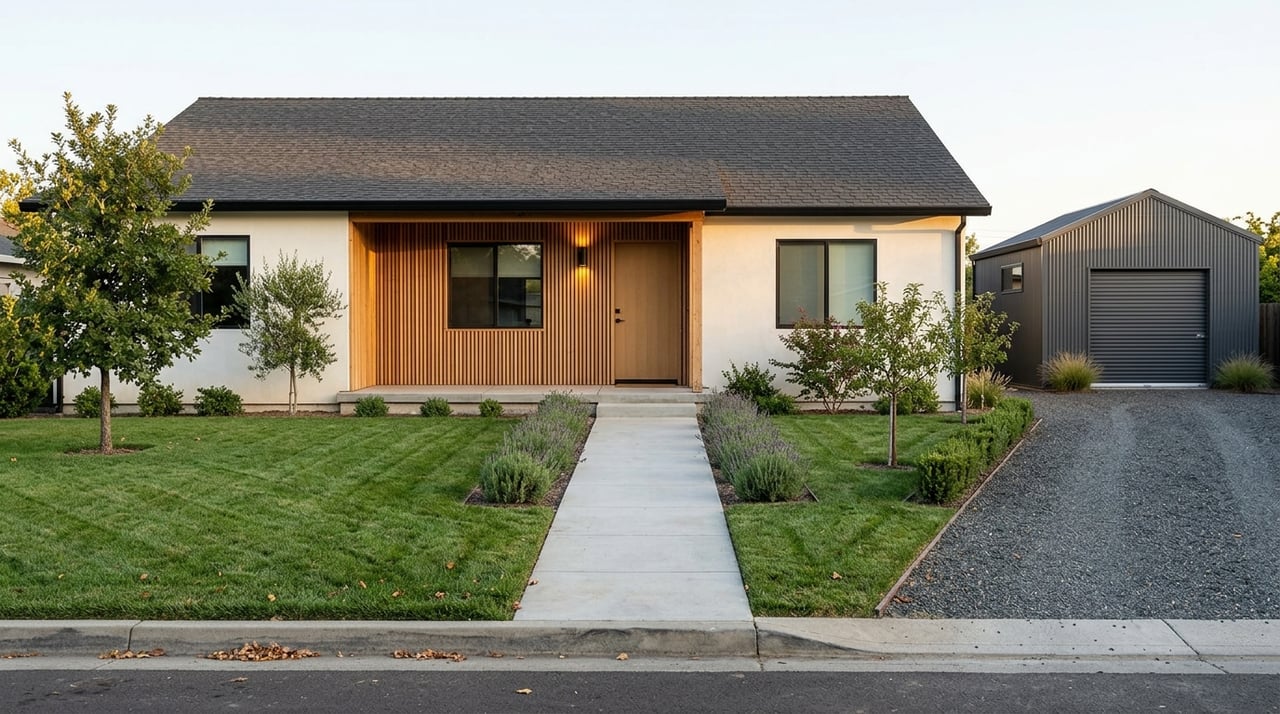
If you picture Ripon as a single-family-home community, the data supports that. The city’s 2023-2031 Housing Element draft says 77.9% of the housing stock was single-family detached in 2022.
That matters because it shapes what you will see most often when you search here. In many parts of Ripon, detached homes are the dominant option, which gives the city a more traditional suburban feel than markets with a heavier mix of large apartment or condo developments.
Lot sizes are often manageable
Ripon’s planning standards show that many common single-family districts use lot sizes of roughly 5,500 to 7,500 square feet, with some areas around 5,000 square feet. In practical terms, that often means homes with usable outdoor space that still feel manageable from a maintenance standpoint.
For buyers who want a yard but do not necessarily want a very large property to maintain, that can be a useful middle ground. It supports the idea that Ripon is built around everyday livability rather than oversized urban density or purely rural sprawl.
Attached and multifamily options exist too
Although detached homes make up the majority of the housing stock, Ripon is not limited to one property type. The city’s housing materials also identify attached homes, duplexes through fourplexes, multifamily buildings, and mobile homes as part of the local mix.
That means you may still find options that fit a lower-maintenance lifestyle or a different budget range. The supply is smaller than the detached-home segment, but it is important to know those alternatives do exist in select areas.
Ripon’s rural edge changes your options
In-town living and rural acreage are different categories
One of Ripon’s defining traits is its relationship to surrounding agricultural land. The city’s General Plan makes clear that active farmland surrounds the broader planning area, with major crops including almonds, walnuts, peaches, beans, alfalfa, and corn.
For you, this creates a meaningful split between in-town residential neighborhoods and properties closer to the rural edge. Those two settings can feel very different in terms of lot size, neighboring land uses, and long-term planning expectations.
Agricultural land is part of the local landscape
Ripon’s planning documents note that much of the surrounding agricultural land is classified as prime farmland or farmland of statewide importance. The city also has a Right to Farm chapter in its municipal code, and the General Plan identifies agricultural reserve and buffer areas not intended for development during the plan period.
That is important if you are considering acreage or orchard-adjacent property. Open land around Ripon is not simply vacant space waiting to change. In many cases, it is part of an active agricultural setting with established long-term use patterns.
Buyers should think about setting, not just square footage
If you are comparing homes in town with acreage nearby, the key question is not only how much land you want. You also need to think about the kind of environment you want day to day.
A home in a neighborhood may offer easier maintenance and quicker access to local amenities. A property near the agricultural edge may offer a very different feel, with more separation and a stronger connection to the working landscape around Ripon.
Everyday convenience in Ripon
Small-town living works best when daily needs are still easy to handle. Ripon’s local amenities support that balance.
The city operates a community center at 259 N. Wilma Ave. and identifies Mistlin Sports Park as an 80-acre park and storm-drain site. The city also posts a seasonal splash-pad schedule for Mistlin Park, which adds another recreation option during warmer months.
The Ripon Branch Library, located at 333 W. Main St., has served the community in its current building since 2006. These kinds of amenities reinforce Ripon’s local scale and help explain why the city appeals to buyers looking for a community-centered setting.
Schools and community scale
Ripon Unified School District lists five elementary schools and two high schools on its website. That district footprint fits with Ripon’s smaller overall size and helps illustrate how community services are organized on a local scale.
For buyers, the main takeaway is simple: Ripon is not trying to function like a major metro area. Its school system, parks, and civic amenities all reflect a more compact community layout.
Commuting from Ripon
State Route 99 is a major advantage
A small-town setting does not mean isolation. Ripon’s General Plan says the city lies along State Route 99, a major intrastate transportation corridor, and sits on the outer edge of Bay Area commute patterns.
That corridor connection is one reason Ripon draws buyers who want a quieter place to live while still needing access to nearby job centers or regional destinations. The same plan notes direct SR 99 access southward across the Stanislaus River to Salida, Modesto, and other destinations.
Regional connections add flexibility
Transit options also support that connectivity. City planning materials describe a Stockton-Manteca-Ripon route, and the current Blossom Express bus runs on Tuesdays and Thursdays with stops in Ripon and Modesto destinations such as Vintage Faire Mall and the Target Center.
For some households, that extra layer of connection matters. It helps Ripon function as a practical home base rather than a purely isolated small town.
What the numbers suggest about the market
Ripon’s Census profile reports a median household income of $133,380, a median owner-occupied home value of $704,800, and median gross rent of $1,851. Those numbers help frame the city as a relatively established, owner-heavy housing market.
For you, that means Ripon may feel different from nearby areas with a much larger renter share or a more mixed housing pattern. It is a market where ownership is common, detached homes dominate, and the local identity leans more residential and community-centered.
How to decide if Ripon fits your goals
If you are thinking about buying in Ripon, start by matching the city’s housing pattern to your actual priorities. A lot of buyers say they want “small-town living,” but that phrase can mean very different things depending on whether you want a neighborhood home, a lower-maintenance option, or land near the rural edge.
A smart first step is to narrow your search around three decision points:
- Property type: detached home, attached home, or a different lower-maintenance option
- Setting: in-town neighborhood or rural-edge environment
- Commute needs: regular Highway 99 access, local convenience, or both
When you get clear on those basics, Ripon becomes easier to evaluate. You are not just choosing a city. You are choosing the kind of daily lifestyle and property setup that fits your next move.
If you are weighing Ripon against other Central Valley locations, a strategic comparison can save time and help you focus on the right inventory from the start. For guidance on Ripon homes, rural-edge properties, or broader Central Valley buying strategy, connect with Adroit Real Estate.
FAQs
Is Ripon mostly single-family housing?
- Yes. The city’s housing-element draft says 77.9% of Ripon’s housing stock was single-family detached in 2022.
Are there smaller-lot homes in Ripon?
- Yes. Common single-family districts include lots of about 5,500 to 7,500 square feet, with some areas around 5,000 square feet.
Are there attached or multifamily homes in Ripon?
- Yes. Ripon’s housing mix also includes attached homes, duplexes through fourplexes, multifamily buildings, and mobile homes, although these make up a smaller share of the market than detached homes.
Is Ripon surrounded by active farmland?
- Yes. City planning documents describe active agricultural land around the broader planning area, including crops such as almonds, walnuts, peaches, beans, alfalfa, and corn.
Is Ripon practical for commuters?
- Yes. Ripon sits along State Route 99, with access toward Salida, Modesto, and other corridor destinations, and the city also has regional bus connections including the Blossom Express.
What makes Ripon feel like a small town?
- Ripon combines a relatively small population, local annual events, community amenities like the library and Mistlin Sports Park, and a housing pattern that is still heavily owner-occupied and single-family oriented.