If you are marketing orchard or vineyard land in Lodi, generic land marketing will usually miss the mark. Buyers in this segment tend to look past raw acreage and ask harder questions about water, soils, planting history, and land-use status before they focus on price. If you want to position a property well, you need to understand what serious agricultural buyers are actually underwriting. Let’s dive in.
Why Lodi land markets differently
Lodi is not just another agricultural area. It sits within one of California’s best-known winegrowing regions, and the broader county economy is deeply tied to crops like grapes, almonds, walnuts, and cherries. According to San Joaquin County’s annual crop reporting, agricultural production topped $3.14 billion in 2024, with almonds and grapes ranking among the county’s top commodities.
That matters because buyers do not view Lodi orchard and vineyard properties as simple vacant land. They evaluate them as operating agricultural assets, redevelopment plays, or transition opportunities. Your marketing needs to reflect that reality from the start.
Lodi AVA drives buyer interest
The Lodi AVA was officially recognized in 1986 and covers about 550,000 acres, including more than 85,000 planted acres of premium winegrapes. It also includes seven nested appellations: Mokelumne River, Jahant, Cosumnes River, Alta Mesa, Clements Hills, Borden Ranch, and Sloughhouse.
For buyers, those sub-areas are not just branding details. Soil, climate, and topography can vary enough from one sub-AVA to another to affect planting decisions, production expectations, and long-term value. That is why location within Lodi should be presented with precision, not broad generalities.
Water is usually the first filter
For most sophisticated buyers, water access and water reliability come first. UC ANR’s vineyard site-assessment guidance makes clear that water access, rights, and permits are essential parts of due diligence.
In practical terms, buyers are not just asking whether the property has a well. They want to know what water rights exist, how reliable the source is, what pumping history looks like, whether there is any district service or surface-water delivery, and whether there are known water-quality concerns.
This issue has become even more important because groundwater governance is active in the region. The California Department of Water Resources noted that the Eastern San Joaquin Subbasin management plans have moved through the state review process, and local agencies in the area have continued plan adoption activity through late 2024 and 2025.
What to include about water
If you are selling orchard or vineyard land in Lodi, a stronger water package usually includes:
- Well logs
- Pumping history
- Surface-water or irrigation district records
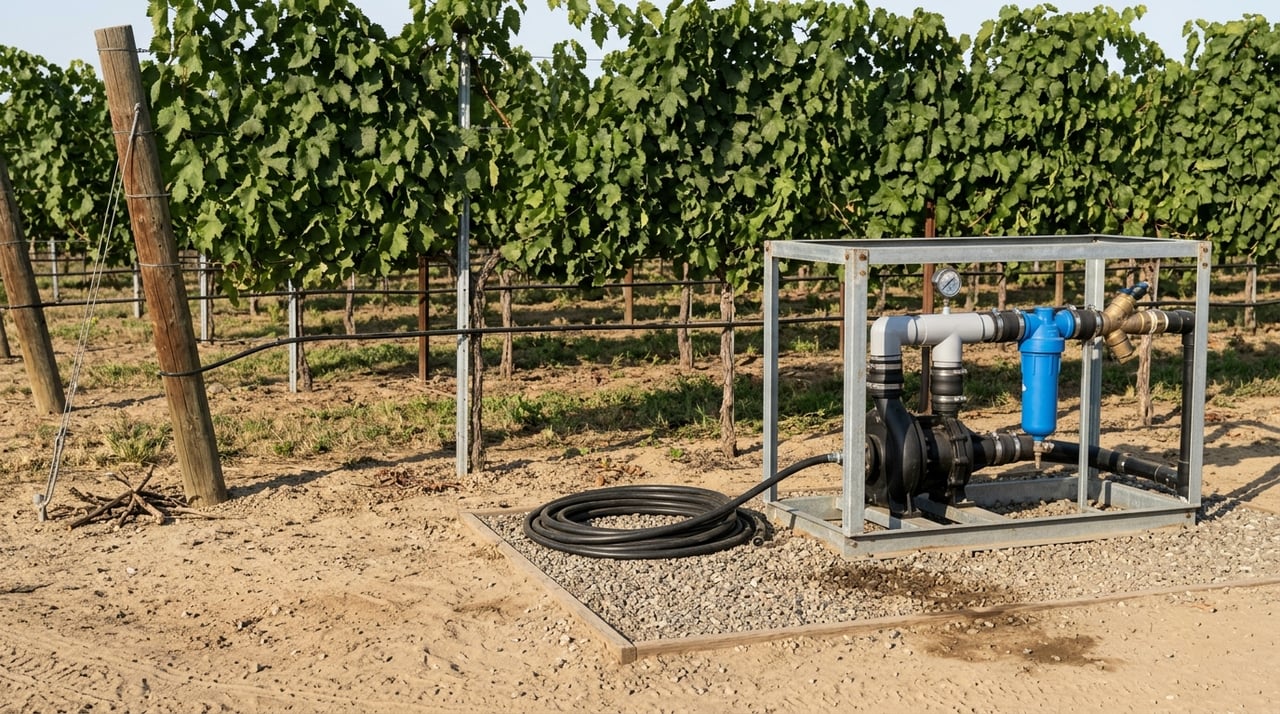
- Basic infrastructure details for pumps, filtration, and conveyance
- Any known water-quality information
- Documentation tied to rights or permits when available
The more clearly you present water data, the faster buyers can determine whether they are looking at stable production ground or a property with higher operating risk.
Soil profile can change the story
In Lodi, soil is not a minor detail. It is often one of the biggest value drivers.
The Lodi Wine region overview highlights the importance of soil differences across the AVA. In the Mokelumne River sub-AVA, deep Tokay and Acampo sandy loams are associated with strong drainage and moderated vine vigor. Other areas can include heavier San Joaquin-series soils that may require deeper site work before planting.
USDA soil descriptions reinforce that difference. Tokay soils are very deep and well drained, while San Joaquin soils are moderately deep to a duripan and have much slower permeability. From a marketing standpoint, that means one parcel may support a premium vineyard story while another nearby parcel may require a more cautious redevelopment or improvement analysis.
Why buyers care about drainage and rooting depth
UC ANR’s orchard soil preparation guidance notes that compacted or stratified soils can limit drainage and water movement. It also warns that if hardpan cannot be shattered down to permeable soil, the site should not be considered suitable for fruit and nut production.
That is a major underwriting issue. Buyers want to understand whether the site supports current production efficiently, whether redevelopment is realistic, and what hidden costs may exist below the surface.
Planting history matters more than acreage
A 40-acre block is not just 40 acres. Buyers want to know what is planted, when it was planted, and how it has performed.
For vineyards, that often includes variety, clone, rootstock, trellis system, yield history, and signs of replant risk. For orchards, buyers look closely at tree age, production history, irrigation compatibility, and whether the planting is still competitive in today’s market.
In Lodi, age can be either an advantage or a warning sign. The region’s old-vine identity is commercially meaningful because it includes a high concentration of own-rooted old vines, many planted between the Gold Rush and Prohibition. Some buyers actively pursue these blocks for distinctive fruit and historic identity.
At the same time, older plantings can carry lower yields, rising management costs, and redevelopment questions. That is why marketing should not assume age is always a premium. It needs to be supported by production data and a clear buyer fit.
Sustainability can strengthen positioning
Lodi has built a recognized sustainability profile, and that can matter during marketing. The region’s LODI RULES sustainable winegrowing program is third-party audited and built around measurable standards covering soil, water, pest management, ecosystem practices, business operations, and human resources.
If a vineyard is certified, that is worth documenting clearly. Verified certification can help differentiate the property because it gives buyers something more concrete than a general sustainability claim.
This is especially useful when you are marketing to operators or buyers focused on premium fruit production. Third-party verification can support confidence in the block’s management history and overall marketability.
Infrastructure still affects value
Even strong soils and reliable water do not tell the whole story. Buyers also inspect the physical plant and access conditions closely.
That includes roads, drainage, wells, pumps, filtration, irrigation uniformity, stream crossings, wet areas, and general field access. UC ANR’s site-assessment guidance treats these as core issues because they affect operating costs, usability, and long-term planning.
A property with weak infrastructure can still sell, but the marketing angle may change. Instead of presenting it as turnkey production ground, you may need to position it as an improvement opportunity with a different pricing strategy.
Williamson Act and preserve status matter
One of the biggest mistakes in agricultural land marketing is overstating future-use flexibility. In San Joaquin County, that can create major problems if the parcel is subject to agricultural preserve or Williamson Act limitations.
According to San Joaquin County’s Agricultural Preserve information, preserves define where the county may enter into Williamson Act and conservation contracts. The California Department of Conservation explains that these contracts restrict land to agricultural or related open-space uses and can affect property-tax assessment.
For sellers, the takeaway is simple: if a property appears to have development upside, that story needs to be checked against actual preserve status, contract limitations, and zoning. Sophisticated buyers will verify those items early.
Repurposing is part of today’s conversation
Some Lodi-area parcels are now being evaluated not only as production properties, but also as transition or repurposing opportunities. That shift is tied in part to groundwater realities and state programs that focus on reducing irrigation demand.
California’s Multibenefit Land Repurposing Program supports projects that reduce groundwater use while creating other benefits tied to water supply, habitat, community health, and climate goals. The broader point is not that every parcel is a candidate, but that some buyers are now underwriting land with multiple future scenarios in mind.
That changes marketing. A weaker block with water constraints, aging plantings, or redevelopment friction may still appeal to the right buyer if it is positioned honestly and supported with strong documentation.
What a strong marketing package includes
If you want to market orchard or vineyard land in Lodi effectively, your package should help buyers answer their key questions quickly.
A practical seller package often includes:
- Parcel and block maps
- Planting dates
- Variety, clone, and rootstock details where relevant
- Yield history
- Well and irrigation documentation
- Surface-water or district service records
- Soil maps and any pit or profile testing
- Drainage and leveling history
- Zoning information
- Williamson Act or agricultural preserve status
- Title and easement information
- Sustainability certification records, if applicable
This kind of package does more than organize documents. It helps frame the asset correctly as a production block, niche premium property, redevelopment candidate, or transition opportunity.
How to position the property correctly
The best marketing strategy starts with a simple question: what is this land, really?
If the parcel has strong water, favorable soils, productive history, and a recognized premium identity, it may be best positioned as a long-term operating asset. If it has aging plantings, uncertain water, or land-use friction, the right strategy may be to market it as a repositioning opportunity instead.
That distinction matters in a selective market. The California Association of Winegrape Growers acreage data shows statewide winegrape acreage declined from 610,000 acres in 2023 to 590,000 acres in 2024. While that does not set values in Lodi by itself, it does suggest buyers may be more disciplined and more selective than before.
Why strategy matters in Lodi
Lodi orchard and vineyard land is a data-driven asset class. Buyers want clarity on water, soils, improvements, planting history, and land-use constraints because those factors shape both value and risk.
If you are preparing to sell agricultural land in Lodi, smart positioning starts with documentation and honest underwriting. When the property’s strengths and limits are clear from the beginning, you are more likely to attract qualified buyers and negotiate from a stronger position. If you want a broker-led, strategic approach to agricultural land marketing, connect with Adroit Real Estate and let’s talk strategy.
FAQs
What makes marketing vineyard land in Lodi different from marketing other land?
- Lodi vineyard land is typically evaluated as an agricultural asset, so buyers focus heavily on water reliability, soils, planting history, infrastructure, and land-use status rather than just acreage and price.
Why is water documentation so important for orchard land in Lodi?
- Buyers often want to review well logs, pumping history, service records, and water-rights information because water access and legal reliability are central to agricultural land value and operating risk.
How do soils affect orchard and vineyard land value in Lodi?
- Soil type affects drainage, rooting depth, redevelopment cost, and production potential, which means parcels with favorable soils may attract different buyers and pricing than parcels with heavier or more restrictive soils.
Does old-vine history increase the value of Lodi vineyard land?
- It can, especially if the block has a strong production identity or appeals to buyers seeking distinctive fruit, but older vines can also raise concerns about yield, management costs, and replant timing.
What should sellers include in a Lodi agricultural land marketing package?
- A strong package usually includes maps, planting details, production history, irrigation and water documentation, soil information, zoning and preserve status, title items, and any sustainability certification records.
How does Williamson Act status affect marketing agricultural land in San Joaquin County?
- Williamson Act or agricultural preserve status can restrict use and affect buyer expectations, so sellers should verify those details before presenting a property as having future development flexibility.