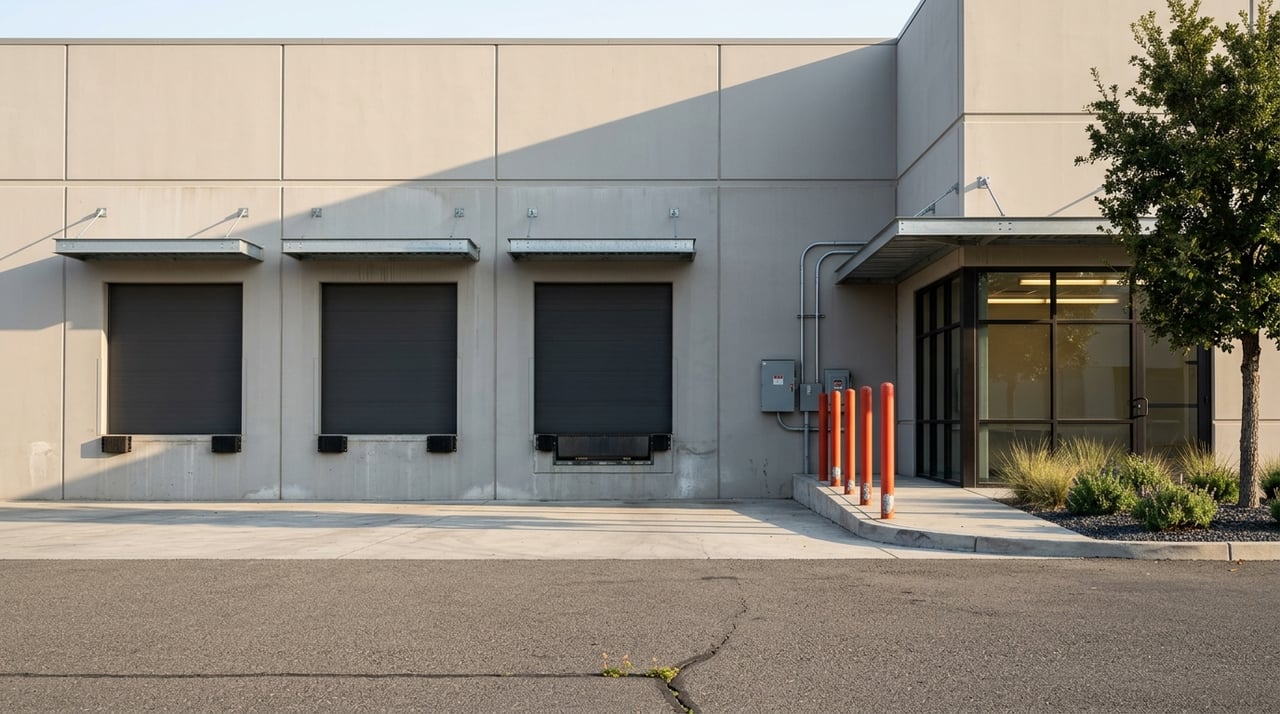
If you are looking at industrial and logistics property in Sacramento, you are not just buying a building. You are buying access, truck flow, lease durability, and a path through local approvals. That is why smart investors look past the headline price and focus on what makes an asset work day to day and hold value over time. Let’s break down how that evaluation usually works.
Sacramento Is A Corridor Market
Sacramento industrial property is often underwritten as part of a larger freight network, not just as a local warehouse play. Caltrans identifies I-5 and SR 99 as parallel north-south freight routes, with I-5 serving long-haul freight and SR 99 supporting mobility through Central Valley communities. Sacramento County also sits at the intersection of I-5, I-80, US 50, and SR 99, which gives the region broad logistics relevance.
That corridor position helps explain why outside capital still pays attention to Sacramento. Cushman & Wakefield reported the sale of the West Sacramento Logistics Portfolio, totaling 1.318 million square feet for $155.3 million, and described the buyer as a last-mile industrial specialist entering the region for the first time. For investors, that kind of transaction signals that the market can attract serious capital when location and lease profile line up.
Recent market reports show a market that is active, but selective. Vacancy has been reported in roughly the 5.4% to 7.0% range, while average asking rents have been around $0.79 to $0.86 per square foot on a triple-net basis. At the same time, premium industrial space remains scarce, while older or less functional buildings face more pricing pressure.
Why Access Often Drives Value
In Sacramento, location analysis usually starts with freight efficiency. Investors want to know how easily trucks can reach major corridors, how much congestion affects reliability, and whether the property supports fast movement in and out. A building can look good on paper but still underperform if truck access slows operations.
Caltrans makes this point clear in its freight planning. Freight improvements are meant to reduce bottlenecks, improve access to freight facilities, and cut truck delay and idling. That matters in Sacramento County, where the I-5 corridor between Elk Grove Boulevard and US 50 has recurring congestion during peak periods and is the subject of an active corridor enhancement project.
For that reason, many investors think in terms of throughput and travel reliability, not just miles to a freeway. A site with strong access to I-5, I-80, US 50, or SR 99 may support a stronger rent story and a deeper buyer pool later. In logistics real estate, time and movement often affect value as much as square footage.
Multimodal Access Can Matter Too
Some users need more than freeway proximity. Sacramento International Airport serves as the region’s air gateway, while Sacramento County describes Mather Airport as capable of handling the largest cargo loads and serving the Northern California market. The Port of West Sacramento also plays a role, with primary cargo activity tied to rice exports and cement imports.
These transportation options do not matter equally for every deal. But for certain industrial users, especially those with specialized cargo or broader distribution needs, multimodal access can strengthen the property’s appeal. It can also shape who your likely tenant or buyer will be.
What Investors Look For In The Building
Once access checks out, the building itself has to function well. According to CBRE’s occupier survey, the top warehouse and distribution features are clear height, dock doors, power supply, column spacing, and room for expansion. These are not cosmetic details. They directly affect how efficiently a tenant can operate.
Truck court depth and truck-turning radius also matter. NAIOP notes that these features affect maneuverability, which is critical for warehouse and distribution use. In practice, a property with weak circulation or limited loading can lose appeal quickly, even if it sits in a strong submarket.
This is where Sacramento’s current market split becomes important. Premium industrial space is still limited, so modern functional buildings tend to hold attention. Older assets can still work, but investors usually price in the risk of functional obsolescence, future capital needs, or a narrower tenant pool.
Common Building Questions
Before moving forward, investors often ask:
- Does the clear height support modern storage needs?
- Are there enough dock doors for the likely user?
- Is the power supply adequate for the intended operation?
- Can trucks move easily through the site?
- Is there room to expand or reconfigure over time?
Those questions help you separate a property that merely exists from one that competes well in the market.
Tenant Quality And Lease Strength
A strong industrial deal is rarely just about the real estate. It is also about who occupies the space and how the lease is structured. Investors typically evaluate tenant credit, industry type, operating stability, and whether the user is likely to stay, expand, or leave at expiration.
CBRE found that 74% of occupiers rank occupancy cost as the top factor in building selection. Lease options, transportation, and building design also ranked highly. That means affordability and flexibility still shape tenant decisions, even in a well-located market.
Growth patterns by industry can matter too. CBRE reported that 64% of respondents planned to expand their U.S. logistics footprint, including 81% of third-party logistics users, 75% of food and beverage users, and 75% of building materials and construction users. If your building fits the needs of expanding user groups, that can support leasing strength and future exit value.
Why Transportation Costs Affect Leasing Demand
Transportation can account for about half, and sometimes as much as 70%, of total logistics spend according to CBRE. That is a major reason corridor access matters so much in Sacramento underwriting. If a building helps a tenant reduce transportation friction, it may support stronger long-term demand than a similar building in a weaker location.
Why Triple-Net Leases Matter
Sacramento industrial rents are commonly quoted on a monthly triple-net basis because net income is central to valuation. NAIOP defines a net lease as one where the tenant pays a share of operating expenses in addition to rent. A triple-net lease pushes taxes, maintenance, insurance, and other occupancy costs to the tenant.
For investors, this matters because the lease structure affects both cash flow clarity and owner risk. Two properties with similar face rents may perform very differently if one has stronger expense pass-throughs and fewer hidden maintenance burdens. That is why lease review is never a side issue in industrial investing.
Entitlements And Due Diligence In Sacramento
A building can appear simple at first glance, but local approvals can change the risk profile fast. In the City of Sacramento, zoning controls allowed use, and site plan or design review is discretionary rather than automatic. The city also states that conditional use permits are discretionary, administrative permits are ministerial, and CEQA compliance remains part of planning review.
Review timelines can vary based on the approval path. The city lists approximate timelines of 2 to 3 months for staff-level design review and 6 to 7 months for Planning and Design Commission review. As of January 1, 2026, new plan review and permit applications must comply with the 2025 California Building Standards Codes and applicable city amendments.
In unincorporated Sacramento County, the zoning code is designed to support a balanced supply of industrial land with access to transportation networks. The county defines M-1 Light Industrial and M-2 Heavy Industrial districts with different standards and impact levels. The county also states that all industrial development is subject to design review, and discretionary design review projects require a pre-application meeting before filing.
A Practical Sacramento Checklist
Before you commit to an industrial or logistics property, confirm these basics:
- Verify the zoning classification
- Confirm whether the intended use is allowed by right or needs discretionary approval
- Review truck circulation and loading layout
- Check parking and utility capacity
- Understand whether redevelopment triggers design review or code updates
- Account for permit timelines in your underwriting
This part of the process is where many avoidable surprises show up. If the approval path is unclear, your timeline, budget, and exit plan can all change.
How Investors Usually Pull It Together
In Sacramento, industrial evaluation is really a five-part test. Investors are looking at market rent, corridor access, building functionality, tenant and lease quality, and entitlement risk. If one of those areas breaks down, the whole deal can underperform.
That is why this market is best viewed as corridor logistics underwriting, not generic warehouse investing. When access works, the building functions well, the lease is durable, and the entitlement path is clear, the asset is generally easier to finance and easier to sell later. When those factors are weak, even a lower price can become expensive.
For investors and owner-users, the goal is not just to find space. It is to find a property that works operationally now and still makes sense when market conditions shift. That is where disciplined analysis creates an edge.
If you are evaluating industrial buildings or land in Sacramento, Adroit Real Estate brings a strategic, numbers-aware approach to complex commercial and industrial deals. When access, functionality, zoning, and negotiation all matter, it helps to have a broker-led team that knows how to pressure-test the opportunity before you commit.
FAQs
How do investors evaluate industrial location in Sacramento?
- Investors usually focus on access to major freight routes like I-5, I-80, US 50, and SR 99, along with congestion, truck reliability, and how efficiently goods can move through the corridor.
What building features matter most for Sacramento logistics space?
- Clear height, dock doors, power supply, column spacing, room for expansion, truck court depth, and turning radius are key features because they affect how efficiently a tenant can operate.
Why are Sacramento industrial rents quoted as triple-net?
- Industrial rents are often quoted on a triple-net basis because investors track net operating income closely, and triple-net leases shift taxes, maintenance, insurance, and other occupancy costs to the tenant.
What due diligence matters for Sacramento industrial property?
- Key steps include confirming zoning, checking whether the use is allowed by right, reviewing truck circulation, verifying parking and utilities, and understanding any design review, permit, or code compliance requirements.
How long can Sacramento entitlement review take for industrial projects?
- In the City of Sacramento, approximate timelines listed by the city range from 2 to 3 months for staff-level design review and 6 to 7 months for Planning and Design Commission review, depending on the approval path.
Why does corridor access affect industrial value in Sacramento?
- Corridor access affects transportation efficiency, and transportation costs can make up a large share of total logistics spend, so properties with better freight access may be more attractive to tenants and future buyers.